Re: Палеолит news
Публикувано на: 22 Сеп 2024, 04:24
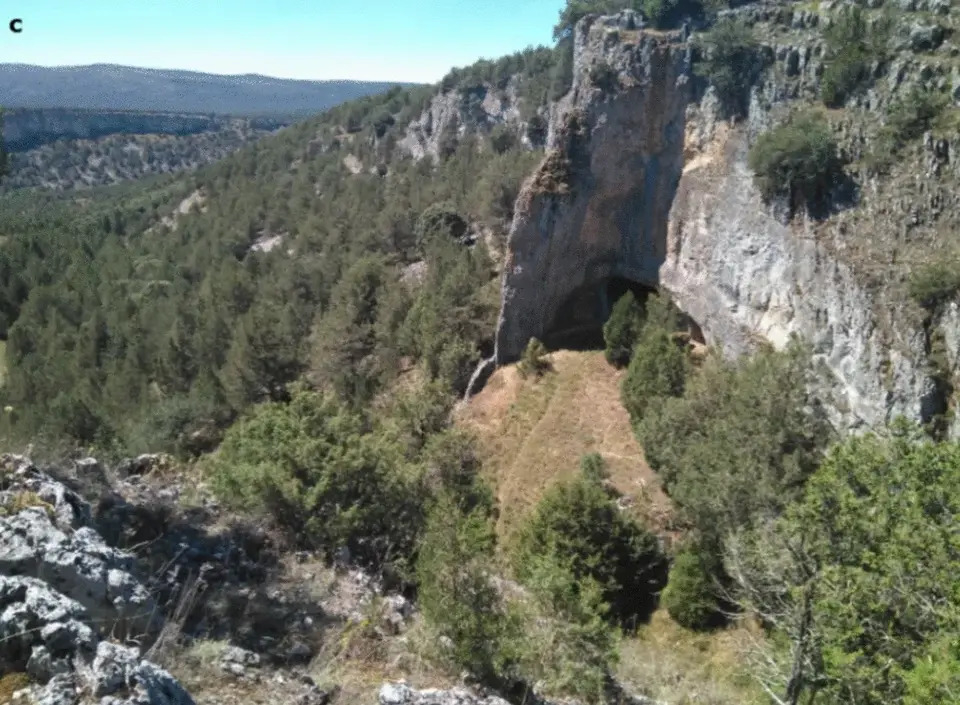
Сапиенсите са били достигнали Балканите преди около 50 хил. години според нови датировки от пещерата Козарника.
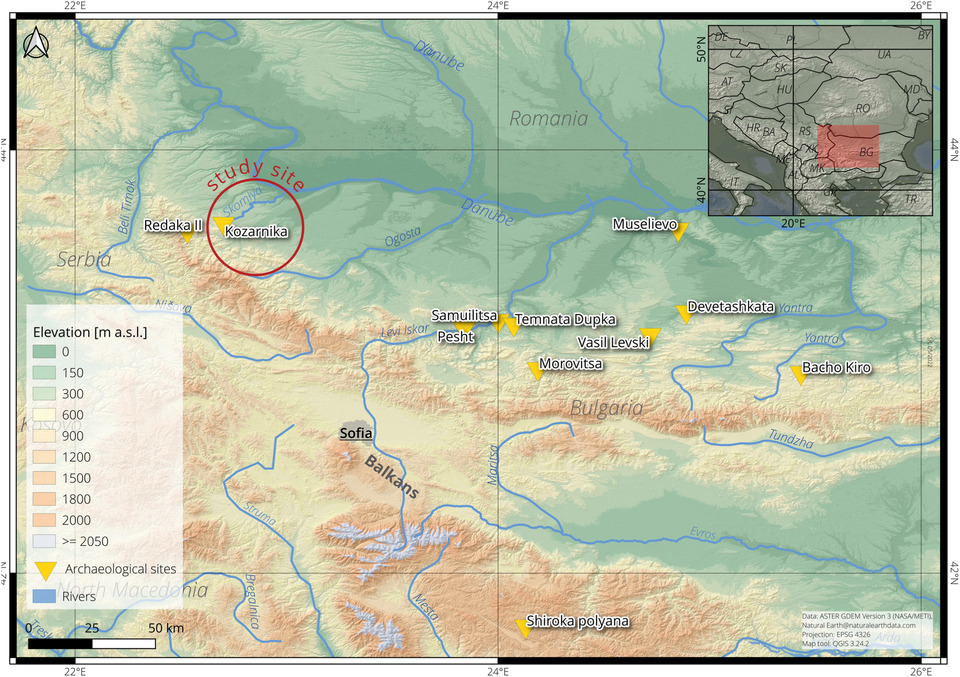
На годишната среща на European Society for the study of Human Evolution в Загреб, състояла се от 11 до 15 септември е излязъл доклад, според който вероятно сапиенските са се появили на Балканите, в частност в пещерата Козарника в северозападна България още преди около 50 хил. години, т. преди известните останки то пещерата Бачо Кира, но все пак не са първите сапиенси в Европа. Те са във френската пещера Мандран. Разбира се ако черепът от Аподима е на сапиенс, то най-старите са от Гърция. И все пак, докато се доберат до Мандран, сапиенските все от някъде са минали и Балканите са си много вероятни.
Та оказва се, че в тази пещера вероятно първите модерни хора са се появили преди почти 50 хил. години, което се доказвало от датите на формиране на един от слоевете там, където инструментите уж били спиентски, а имало и някакъв сапиентски зъб в същия контекст.
Същевременно и неандерталците били посещавали пещерата одо преди около 43-41 хил. години
https://mcusercontent.com/9347aa3598d50 ... Zagreb.pdf
AMS dating reveals early presence of Homo sapiens at the Kozarnika site (Bulgaria) 45-50,000
years ago
Tom Higham1,2, Rachel Hopkins3,4, Jean-Luc Guadelli5
, Dustin White6
, Chris Stringer7
, Michael Buckley8
, Aleta
Guadelli9
, Philippe Fernandez10, Nikolai Sirakov11
1 - Department of Evolutionary Anthropology, University of Vienna, Vienna, Austria · 2 - Human Evolution and Archaeological Science
(HEAS) Network, Vienna, Austria · 3 - RLAHA, University of Oxford, Oxford, United Kingdom · 4 - Meow Wolf, Inc., NM, USA · 5 -
PACEA-UMR 5199 CNRS, Université de Bordeaux, France · 6 - Department of Chemistry, University of York, United Kingdom · 7 -
Natural History Museum, London, United Kingdom · 8 - Manchester Institute of Biotechnology, University of Manchester, United
Kingdom · 9 - National Institute of Immovable Cultural Heritage, Sofia, Bulgaria · 10 - LAMPEA UMR 7269, CNRS, Aix Marseille
Univ., Aix-en-Provence, France · 11 - National Institute of Archaeology with Museum-Bulgarian Academy of Sciences, Sofia, Bulgaria
The site of Kozarnika in Bulgaria is a key, deep (~6 m) archaeological sequence spanning the Lower, Middle and Upper
Palaeolithic of Europe. In its latter phases, it documents the transition from a Neanderthal-dominated Europe, to one in which
only modern humans are present. The process of this transition is of major importance to understanding the timeline of hominin
dispersals, extinctions and replacement in Europe.
We obtained 37 new AMS radiocarbon dates to build a robust chrono-stratigraphy for the site through sampling humanly
modified bones, artefacts and human remains. We focussed particularly on dating the Initial Upper Palaeolithic phase of the
occupation, in geological layer 6/7, because of its potential link with early dispersing Homo sapiens populations. We built a series of
Bayesian models of the results to test the inclusion or exclusion of various determinations. We used a KDE model approach to
plot the entire set of results, and compared them with others regional sites.
The KDE Models show that the latter phases of human occupation at Kozarnika comprised five distinct periods, dated between
about 50-26,000 years ago. We found that the 6/7 phase ranged from 48,500-44,050 cal BP, probably starting from about 49,960
cal BP. We think the most likely occupants at this time are modern humans, as indirectly evidenced by a Homo sapiens tooth found
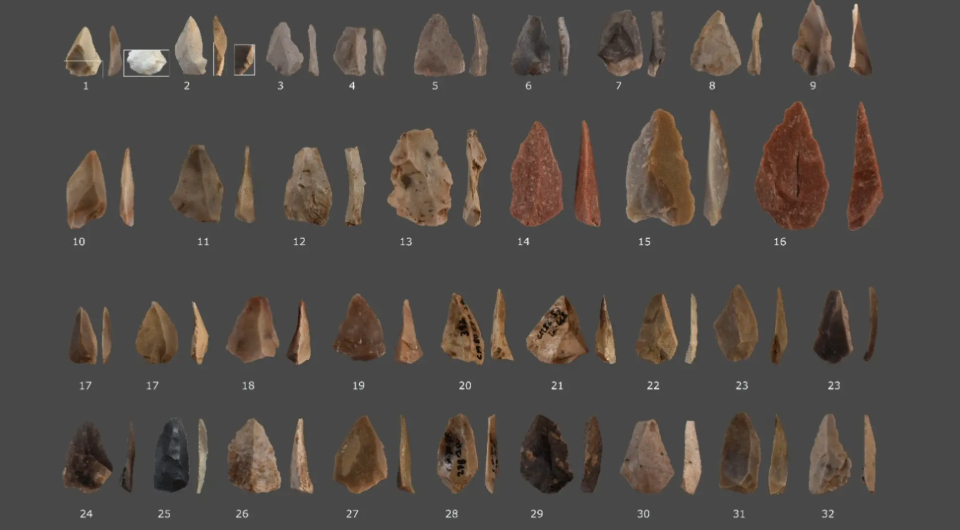
within the same context. The stone tool evidence from the site contains some Levallois pieces, however, with echoes of the earlier
Middle Palaeolithic. This mix of stone tools of different traditions may represent interstratification – with alternating visits by both
Neanderthals and modern humans. Aside from the evidence from Apidima (Greece) which dates to about 210,000 years ago [1],
Kozarnika is the earliest site found in eastern Europe from the last 100,000 years which contains evidence for the presence of
modern humans.
Neanderthal presence might in fact extend closer to 43,130-41,490 cal BP (95.4% prob.), ended by the start of the earliest
Kozarnikian industry at the cave; the Kozarnikien très ancien, as elsewhere in Europe with similar industries. The application of
sediment DNA approaches might help to unlock further evidence about the humans that were present during this crucial period,
as the Middle Palaeolithic ended and the early Upper Palaeolithic began.
-----------------------------------
Лично за мен резюмето ми е твърде кратко и неясно за да си формирам мнение. Т .е. какво точно са изследвали за да получат най-старите дати, как са установили, че те отговарят на присъствие на сапиенси и сигурни ли са датирането на този зъб само на база стратиграфия. Вероятно в целия доклад има отговори на тези въпроси.



 Айде, кат се върнеш и имаш нет погледни това: